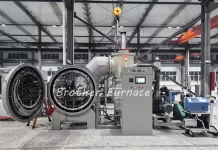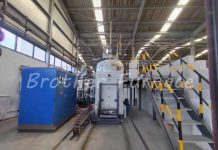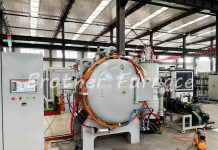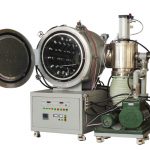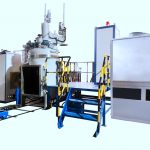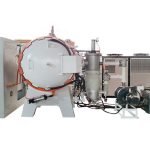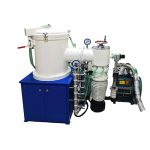

A vacuum induction melting furnace (VIM furnace) is used to melt alloys that cannot be processed safely in air. The system combines electromagnetic induction heating with a sealed vacuum chamber, removing atmospheric gases before melting and preventing oxidation, gas pickup, and contamination.
The vacuum induction melting furnace is widely used for producing high-performance and reactive alloys where strict control of composition and cleanliness is required.
This page explains the working principle of a VIM furnace, its main system components, typical furnace configurations, crucible selection, and key parameters for system specification.
Table of Contents
- What is a Vacuum Induction Melting Furnace?
- How a VIM Furnace Works: The Physics
- The 6 Key Components of a VIM Furnace
- VIM Furnace Types and Configurations
- Capacity and Power Reference
- The VIM Process: 7 Stages Explained
- Crucible Selection by Alloy Type
- VIM Furnace vs. VAR vs. ESR
- Industrial Applications and Material Guide
- Honest Limitations of VIM Furnaces
- How to Specify a VIM Furnace
- Frequently Asked Questions
What is a Vacuum Induction Melting Furnace?
A vacuum induction melting (VIM) furnace is a sealed steel vessel used to melt and refine metals under high vacuum using electromagnetic induction heating. Induction heating melts and stirs the charge without physical contact, while the vacuum environment prevents atmospheric reactions, removes dissolved gases, and allows volatile impurities to evaporate.
A vacuum induction melting (VIM) furnace enables melting, refining, and alloying within a single controlled cycle.
Typical results include oxygen levels below 20 ppm, nitrogen below 10 ppm, and control of reactive elements within ±0.05–0.12%. Such process conditions cannot be achieved in open-air melting.
VIM furnaces are used for alloys that contain reactive elements such as aluminum, titanium, boron, and zirconium, which readily react with oxygen and nitrogen at melting temperatures. In open-air melting, these elements oxidize before being fully incorporated into the alloy. A VIM furnace avoids this by evacuating the chamber prior to melting.
Today, VIM processing is widely used for the production of nickel-based superalloys, turbine disc materials, aerospace castings, cobalt-chromium medical alloys (ASTM F75), and high-performance permanent magnets.
| Parameter | Standard Air Induction Furnace | Vacuum Induction Melting Furnace |
|---|---|---|
| Operating atmosphere | Open air | Vacuum 7×10⁻³ Pa or lower |
| Oxygen content (typical) | >100 ppm | <20 ppm |
| Nitrogen content (typical) | >50 ppm | <10 ppm |
| Ti/Al compositional control | ±0.3% | ±0.05–0.12% |
| Volatile impurity removal (Pb, Bi) | Not possible | Yes — evaporates under vacuum |
| Reactive element alloys (Al, Ti, B, Zr) | Severe oxidation loss | Precise control |
| Capital cost vs. equivalent capacity | Baseline | 3–8× higher |
How a VIM Furnace Works
Electromagnetic Induction Heating
An alternating current at medium frequency (typically 500–3000 Hz) flows through a water-cooled copper coil surrounding the crucible, generating a time-varying magnetic field. This field induces eddy currents directly within the metal charge. The electrical resistance of the metal converts these currents into heat, resulting in internal and uniform heating without any physical contact between the heating source and the melt.
This contact-free heating method provides two key advantages:
- No electrode contamination: Unlike arc furnaces, no electrode material is introduced into the melt.
- Electromagnetic stirring (pinch effect): The interaction between induced currents and the magnetic field generates continuous circulation in the molten metal, improving temperature uniformity and chemical homogeneity.
The Vacuum Environment
The sealed chamber is evacuated to 1×10⁻² to 7×10⁻³ Pa before and during melting. At these pressures:
| What Happens Under Vacuum | Why It Matters |
|---|---|
| Dissolved O and N are driven out by the partial pressure gradient | Prevents oxide/nitride inclusions that reduce fatigue life |
| Hydrogen solubility in liquid metal drops sharply | Eliminates hydrogen porosity in castings |
| Volatile impurities (Pb, Bi, Sb, Se, Te) evaporate | Removes grain-boundary embrittling elements — no other process can do this |
| Reactive elements (Al, Ti, B, Zr) do not oxidize | Enables tight compositional control impossible in air |
In conventional air induction melting, controlling titanium content in nickel-based superalloys to better than ±0.3% is difficult due to oxidation losses. Under VIM furnace conditions, titanium and aluminum are typically controlled within ±0.05–0.12%.
For alloys such as IN718, where titanium content influences the formation of the γ″ strengthening phase, this level of control is critical for meeting specifications such as AMS 5662.
The 6 Key Components of a VIM Furnace
A production VIM furnace consists of six main subsystems. Understanding the function of each is important for evaluating equipment specifications and ensuring stable operation.
1. Vacuum Chamber and Sealing System
The furnace body is a double-walled, water-cooled steel vessel. Sealing is achieved using metal O-rings or elastomer seals at chamber flanges, observation windows, and feedthrough ports. All mechanical movements — including furnace tilting and crucible handling — are implemented through vacuum-compatible rotary or linear feedthroughs.
Seal integrity directly affects vacuum performance. Even a single worn O-ring can significantly increase chamber pressure. When pump-down time increases, seal condition should be checked first.
2. Vacuum System (Pump Train)
A multi-stage pump train is required to reach the process vacuum level:
– Roughing pump (mechanical rotary vane): from atmosphere to ~10 Pa
– Roots blower: from ~10 Pa to ~0.1 Pa, providing high pumping speed
– Oil diffusion pump or turbomolecular pump: final vacuum to the 10⁻³ Pa range
Cold traps or baffles are used to protect the diffusion pump from metal vapor and crucible dust during melting. For medical and high-purity applications, turbomolecular pumps are preferred to eliminate the risk of oil backstreaming.
3. Medium-Frequency IGBT Power Supply
Modern VIM furnaces use IGBT (Insulated Gate Bipolar Transistor) medium-frequency power supplies operating at 500–3000 Hz. These systems provide stepless power control from low to full output, electrical efficiency above 92%, and precise frequency adjustment to maintain stable coupling during melting.
Older KGPS (thyristor-based) systems are still used in some installations but offer lower efficiency and less precise control. IGBT power supplies are recommended for new equipment.
4. Induction Coil and Crucible Assembly
The induction coil is made from water-cooled copper tubing. The crucible is positioned concentrically within the coil. The gap between the coil and crucible is carefully controlled to ensure efficient energy transfer while maintaining electrical isolation.
Any contact between the coil and crucible can cause a short circuit. Maintaining proper coupling clearance is therefore a critical design and manufacturing requirement.
5. Vacuum-Locked Alloy Feeder
The alloy feeder is a multi-chamber system (typically 3–5 hoppers) that allows alloying elements to be added into the melt without breaking vacuum. This is particularly important for reactive elements such as aluminum and titanium, which must be added after the refining stage.
Systems with insufficient feeder capacity may require breaking vacuum during the process, which negatively affects alloy quality. Feeder configuration should therefore be specified based on alloy complexity.
6. Control System and Instrumentation
The control system integrates process control, monitoring, and data recording functions. Typical components include:
– PLC-based control for power and process sequencing
– Optical pyrometer or radiation thermometer for temperature measurement
– Pirani and cold-cathode gauges for vacuum monitoring
– Tilt position control with pour rate feedback
– Data logging for batch traceability
For aerospace and medical applications, compliance with standards such as 21 CFR Part 11 may be required.
VIM Furnace Types and Configurations
The selection of a VIM furnace configuration depends on several key factors, including production volume, alloy type, ingot geometry, and required operating mode.
In particular, it is important to determine whether the furnace must support multiple heats between chamber vents, as this directly affects chamber design, productivity, and overall system configuration.
By Casting Method
| Type | How It Works | Best For |
|---|---|---|
| Tilt-pour | Furnace body rotates to pour melt into stationary mold below the coil | Most common; round or electrode ingots; R&D to industrial scale |
| Bottom-pour (stopper rod) | Melt flows through a stopper-controlled nozzle in the crucible base into a mold below | Investment casting; complex mold geometries; reduces turbulence during pour |
| Mold carousel (multi-mold) | Rotating carousel holds multiple molds filled sequentially from a single heat | High-volume investment casting; superalloy bars and billets; NdFeB strip casting |
By Mold Chamber Design
| Configuration | Description | Advantage |
|---|---|---|
| Single-chamber | Melt and mold in same vacuum space; chamber vented after each heat | Lower cost; simpler; suitable for R&D and low-volume production |
| Dual-chamber with antechamber | Separate mold lock allows mold change without venting the main chamber | Higher productivity; multiple heats per pump-down; essential for production |
| Continuous casting VIM | Melt flows continuously into a water-cooled mold via stopper rod; rod or bar withdrawn as solidification progresses | Near-net-shape bar stock; used for NdFeB and specialty steel |
Capacity and Power Reference
Power requirement scales with both capacity and alloy melting point. Use this table as a starting reference; final specification requires confirmation based on alloy density and target cycle time.
| Nominal Capacity | Typical Power (kW) | Frequency (Hz) | Typical Application |
|---|---|---|---|
| 5 kg | 35–50 kW | 2000–3000 | Laboratory, precious metals, R&D |
| 10–15 kg | 50–80 kW | 2000–3000 | Laboratory, pilot-scale alloy development |
| 25 kg | 100–120 kW | 1000–2500 | Standard R&D scale; most academic labs |
| 50 kg | 150–200 kW | 1000–2000 | Pilot production; medical implant alloys |
| 100–200 kg | 200–300 kW | 500–1500 | Specialty alloy production; NdFeB master alloy |
| 300–500 kg | 300–500 kW | 500–1000 | Mid-scale superalloy; VAR electrode production |
| 1 ton | 500–800 kW | 500–1000 | Industrial superalloy; large aerospace ingots |
| 2 ton | 800–1200 kW | 500–800 | Production-scale aerospace and nuclear alloys |
| 5+ ton | 1500+ kW | 200–500 | Large industrial production; specialty steel |
Density Matters: Furnace capacity is typically rated based on steel (~7.9 g/cm³).
For lower-density materials such as titanium alloys (~4.5 g/cm³), the actual charge weight will be significantly lower. For example, a crucible rated at 100 kg (steel) will hold only about 57 kg of titanium alloy.
In practice, capacity should always be specified based on the primary alloy being processed.
Real-World Example: 2-Ton VIM Furnace Installation in Turkey
To illustrate a typical industrial-scale application, in January 2026 Brother Furnace completed the installation and commissioning of a 2-ton vacuum induction melting furnace for a specialty alloy manufacturer in Turkey. The project involved a five-engineer on-site team and required over one month to complete installation, system integration, and commissioning.
This installation was a repeat order. The same customer had previously operated a 300 kg VIM furnace and upgraded to a 2-ton system after verifying performance in production conditions and overall service support.
The project scope also included full operational training for the customer’s production and maintenance teams.
→ 2 ton vacuum induction melting furnace installation case study
The VIM Process: 7 Stages Explained (Step-by-Step)
A complete VIM furnace heat follows a defined sequence. Each stage affects melt quality, composition control, and overall cycle time.
Stage 1 — Charge Preparation and Loading
All raw materials are weighed, surface-cleaned, and sized for the crucible. Oversized pieces can cause bridging and trap gases, while excessively small pieces increase surface area and gas pickup. The base charge (typically 60–70% of total heat weight) is loaded into the crucible, with alloy additions prepared separately in feeder hoppers.
Stage 2 — Chamber Evacuation
The chamber is sealed and the vacuum pump system is started. Evacuation to the working vacuum (~7×10⁻³ Pa) typically takes 20–45 minutes. Slow pump-down may indicate seal leakage or excessive moisture in the charge. In practice, low power is often applied during early evacuation to remove residual moisture before reaching full vacuum.
Stage 3 — Melting
Power is applied gradually, and the charge melts progressively from the bottom upward. This controlled melting allows gases to evolve steadily. Chamber pressure may temporarily increase as volatile components are released, requiring sufficient pumping capacity. Melting rate is adjusted to prevent excessive agitation or spattering.
Stage 4 — Refining Period
Once fully molten, the bath is held at 50–150°C above the liquidus temperature. During this stage, the carbon–oxygen (C–O) reaction is utilized: residual carbon reacts with dissolved oxygen to form CO gas, which is removed by the vacuum system. This “carbon boil” is an effective mechanism for oxygen removal. The refining stage continues until chamber pressure stabilizes, typically within 20–60 minutes.
Stage 5 — Alloying and Composition Adjustment
Reactive elements such as Al, Ti, B, Zr, and rare earths are added through the feeder system without breaking vacuum. Each addition is followed by a mixing period. Samples are taken through a vacuum-sealed port and analyzed, with adjustments made until the required composition is achieved.
Stage 6 — Casting
The furnace tilts to pour the melt into preheated molds, either under vacuum or with argon backfill. Casting under vacuum helps reduce gas porosity. Pour rate is controlled by tilt angle and pouring speed.
Stage 7 — Solidification and Venting
The molds remain in the chamber until the ingot has fully solidified, typically below 400–600°C for most superalloys. Only after sufficient cooling is the chamber vented, allowing mold removal and preparation for the next heat.
Crucible Selection by Alloy Type
Crucible selection is a critical materials decision in VIM furnace operation. An incompatible crucible can introduce contamination into the melt that cannot be removed by the vacuum process.
| Crucible Material | Max. Temp. | Suitable Alloys | Avoid With | Notes |
|---|---|---|---|---|
| Magnesia (MgO) | >1800°C | Ni-based superalloys, Co-based alloys, steels, Fe-Ni alloys | Highly aluminous compositions (Al >6%) | Most common for superalloys; good slag resistance; relatively neutral chemistry |
| Alumina (Al₂O₃) | ~1750°C | Stainless steels, low-Al alloys, Cu alloys | Ti-rich alloys, Mn-rich steels, alloys with Al >4% | Lower cost; thermal shock risk requires careful preheating |
| Zirconia (ZrO₂) | >2000°C | Ti alloys, Co-based alloys, Pt-group metals, high-Mn steels | Alloys with high Si content | Excellent chemical stability; expensive; needs stabilizer (Y₂O₃ or CaO) |
| Graphite | >2500°C | Cu alloys, precious metals under inert backfill only | Steel, Ni alloys, any carburizing alloy in vacuum | Carbon contamination inevitable in vacuum for Fe/Ni alloys — do not use |
| Calcia (CaO) | ~1800°C | High-Al titanium alloys, reactive alloys where MgO is marginal | Moisture exposure (hydrates rapidly) | Excellent for Ti alloys; must be baked and kept dry at all times |
Common Mistake: Using an alumina crucible for nickel-based superalloys containing more than 4% Al. At melting temperatures, aluminum in the melt reacts with the Al₂O₃ crucible wall, leading to the formation of alumina inclusions and changes in alloy composition.
In practice, crucible–alloy compatibility should be verified before processing any new alloy grade.
VIM Furnace vs. VAR vs. ESR: Which Do You Need?
A VIM furnace is almost always the first step in producing high-grade alloy ingots, but rarely the last. Understanding where VIM fits determines the correct process route and total equipment investment.
| Process | Primary Function | What It Removes | What It Cannot Do | Position in Sequence |
|---|---|---|---|---|
| VIM Furnace | Chemistry control; primary melting | O, N, H (dissolved gases); volatile impurities (Pb, Bi, Sb) | Remove stable oxide inclusions from raw materials; prevent macro-segregation | First melt (master ingot) |
| VAR — Vacuum Arc Remelting | Ingot solidification control; macro-segregation reduction | Residual gases; some inclusions by floatation | Adjust chemistry; requires VIM-quality electrode as input | Second or third melt |
| ESR — Electroslag Remelting | Inclusion removal; surface quality | Oxide inclusions (into reactive slag); sulphur | Achieve VIM/VAR-level gas purity; not a vacuum process | Second melt (between VIM and VAR) |
Standard Melt Routes by Application
| Application | Recommended Route |
|---|---|
| R&D, pilot production, lab alloy development | VIM furnace only. Sufficient purity for characterization and pilot work. |
| Aerospace investment castings, medical implants, premium tool steels | VIM + VAR. VIM controls chemistry; VAR refines solidification structure. |
| Rotating turbine discs, life-critical bearing steels, nuclear-grade alloys | VIM + ESR + VAR. Required by AMS 2300 and most aerospace primes. |
| Standard structural steels, cast iron, commodity aluminum | Conventional furnace — not VIM. The cost premium is unjustified. |
Industrial Applications and Material Guide
Aerospace — Turbine Engine Components
The founding application and largest market for VIM furnaces. Nickel-based superalloys for turbine blades, vanes, and discs (IN718, René 41, Waspaloy, MAR-M247, CMSX-4) all require a VIM furnace as the primary melt step. For single-crystal blade alloys, VIM chemistry control of Al/Ti/Ta ratios is critical to achieve the correct γ/γ′ microstructure.
Medical Implants and Surgical Instruments
Cobalt-chromium alloys (CoCrMo per ASTM F75, ASTM F1537) for orthopaedic implants are routinely processed in VIM furnaces. The absence of oxide and nitride inclusions directly improves implant fatigue life and reduces particulate debris in the joint. Titanium alloys (Ti-6Al-4V ELI per ASTM F136) require VIM to meet interstitial element limits: O ≤ 0.13%, N ≤ 0.05%, H ≤ 0.012%.
Rare-Earth Permanent Magnets (NdFeB, SmCo)
Magnetic properties of Nd₂Fe₁₄B and SmCo₅/Sm₂Co₁₇ are extremely sensitive to oxygen contamination, which forms non-magnetic rare-earth oxide phases that reduce remanence. VIM furnaces produce master alloy ingots with oxygen below 200–500 ppm, subsequently processed by strip-casting or hydrogen decrepitation for powder metallurgy.
Nuclear and Energy
Zirconium alloys (Zircaloy-2, Zircaloy-4) for nuclear fuel cladding require hafnium content <100 ppm. A VIM furnace with calcia or zirconia crucibles under high vacuum is the standard production route. Nickel alloys for steam generator tubing (Alloy 690) are also VIM processed.
Specialty Steels
Maraging steels (18Ni grades), ultra-high-strength steels (AerMet 100, M50 bearing steel), and certain stainless grades (Custom 465, Custom 455) require VIM furnace processing when the oxygen and inclusion content of air-melted grades is insufficient for rotating machinery and landing gear applications.
| Key Performance Metric | VIM Furnace Result | vs. Air Induction Furnace |
|---|---|---|
| Typical O content | <20 ppm | vs. >100 ppm |
| Typical N content | <10 ppm | After VIM refining |
| Ti/Al compositional control | ±0.05–0.12% | vs. ±0.3% |
| Thermal efficiency | 80–90% | Direct induction heating |
| Maximum temperature | up to 2000°C | Coil/crucible dependent |
| Base vacuum | 7×10⁻³ Pa | Standard 3-stage pump system |
Honest Limitations of VIM Furnaces
Important: The following limitations are real engineering constraints. Any supplier who dismisses them is not giving you accurate guidance.
Cannot Remove Stable Inclusions from Raw Materials
Oxide inclusions (silica, alumina, titania) present as solid particles in the raw charge do not dissolve under vacuum — they float or sink in the liquid bath. Raw material cleanliness is non-negotiable for VIM furnace operation. For removing inclusions, ESR is the correct tool, not VIM.
Volatile Alloying Elements Can Be Lost
The same vacuum mechanism that removes Pb and Bi can also remove desirable elements with high vapor pressure. Manganese, chromium (to a lesser extent), and zinc can evaporate under high vacuum at elevated temperatures. Vacuum level must be managed carefully — sometimes partially backfilling with argon to suppress evaporation.
Ingot Macro-Segregation
A VIM furnace controls chemistry precisely, but ingot solidification follows the same physics as any cast ingot. The ingot center (solidifying last) will differ in composition from the surface. For large structural ingots, VAR or ESR secondary processing is required.
Higher Capital and Operating Cost
VIM furnaces require 3–8× the capital investment of equivalent air induction furnaces. Operating costs are also higher: vacuum pump maintenance, crucible replacement (typically 5–20 heats per crucible), and longer cycle times. For alloys where purity requirements do not justify this, conventional melting is the rational choice.
Not Suitable for Very High Carbon Contents
The C-O refining reaction that removes oxygen in superalloys becomes a liability for alloys requiring high retained carbon. For certain tool steels and cast irons, the vacuum drives CO generation rather than carbon retention. These materials require partial argon backfill.
How to Specify a VIM Furnace
Vague specifications lead to incorrect equipment and poor outcomes. Define these parameters clearly when requesting a quotation:
| Parameter | What to Specify | Typical Range |
|---|---|---|
| Melt Capacity | Maximum heat weight in kg for your primary alloy (use actual alloy density) | 5 kg – 30,000 kg |
| Primary Alloy | Alloy name/grade, composition range, liquidus temperature | Ni superalloy, Ti alloy, stainless, NdFeB, etc. |
| Required Vacuum Level | Target base vacuum in Pa before power-on | 7×10⁻³ to 1×10⁻³ Pa for most applications |
| Power Requirement | kW rating; scales with capacity and melting point | 35 kW (5 kg lab) to 1500+ kW (industrial) |
| Power Supply Type | IGBT (preferred) or KGPS; frequency range | 500–3000 Hz |
| Crucible Material | Per alloy compatibility table above | MgO, Al₂O₃, ZrO₂, CaO |
| Feeder Capacity | Number of hoppers, weight per hopper | 3–8 hoppers; 0.1–10 kg each |
| Casting Method | Tilt-pour, bottom-pour, or mold carousel | Depends on ingot geometry |
| Mold Chamber | Single-chamber vs. antechamber; mold preheating | Antechamber required for multi-heat production |
| Control System | PLC brand, HMI type, data logging, remote access, regulatory compliance | Siemens/Mitsubishi PLC standard |
| Cooling Water | Available flow rate (T/H) and inlet temperature | Scales with furnace power rating |
Sizing Tip: A 100 kg steel crucible holds approximately 57 kg of titanium alloy (density ~4.5 g/cm³ vs. steel’s ~7.9 g/cm³).
For multi-alloy VIM furnaces, size to the densest alloy and verify vacuum pump capacity is adequate for the full chamber volume at maximum outgassing load.
Need a VIM Furnace? Get Engineering Support.
Brother Furnace designs and manufactures Vacuum Induction Melting (VIM) furnaces from 5 kg lab-scale to 2+ ton industrial production. Every quotation includes a free engineering consultation on furnace selection, crucible configuration, and vacuum system sizing to ensure your process success.
→ View VIM Furnace Specifications and Models
Frequently Asked Questions
What is a vacuum induction melting furnace?
A vacuum induction melting furnace is a sealed, evacuated system that uses electromagnetic induction to melt and refine metals under high vacuum (7×10⁻³ Pa or lower). It integrates an IGBT medium-frequency power supply, a water-cooled induction coil, a refractory crucible, a multi-stage vacuum pump train, and a vacuum-locked alloy feeder. The result is alloys with oxygen below 20 ppm, nitrogen below 10 ppm, and reactive element control to ±0.05–0.12% — results that are impossible in open-air furnaces.
What is a VIM furnace used for?
VIM furnaces produce nickel-based and cobalt-based superalloys for aerospace turbine components, maraging steels, titanium alloys for aerospace and medical implants, rare-earth permanent magnet alloys (NdFeB, SmCo) for EV motors and wind turbines, zirconium alloys for nuclear fuel cladding, and premium bearing steels. Any alloy containing reactive elements — Al, Ti, B, Zr, Nb — that would oxidize in an open-air furnace requires a VIM furnace.
What is the difference between a VIM furnace and a standard induction furnace?
A standard induction furnace melts metal in air, allowing oxygen and nitrogen to form oxide and nitride inclusions and causing oxidation loss of reactive elements. A VIM furnace operates in a sealed, evacuated chamber at 7×10⁻³ Pa — achieving oxygen below 20 ppm vs. over 100 ppm in air melting, and Ti/Al control to ±0.05–0.12% vs. ±0.3%. Capital cost is 3–8× higher, justified only for alloys requiring these purity levels.
What vacuum level does a VIM furnace achieve?
A production VIM furnace achieves a base vacuum of 7×10⁻³ to 1×10⁻³ Pa using a three-stage pump train: mechanical roughing pump (atmosphere to ~10 Pa), Roots blower (~10 Pa to ~0.1 Pa), and oil diffusion or turbomolecular pump (to 10⁻³ Pa range). Evacuation from atmosphere to working vacuum takes 20–45 minutes depending on chamber volume and charge outgassing load.
What crucible material is used in a VIM furnace?
Magnesia (MgO) is most common for nickel superalloys and steels. Alumina (Al₂O₃) suits stainless steels and low-Al alloys but reacts with alloys containing over 4% Al. Zirconia (ZrO₂) is preferred for titanium alloys. Calcia (CaO) is used for high-Al titanium alloys. Graphite cannot be used in vacuum for steel or nickel alloys — carbon contamination is inevitable.
What power supply does a VIM furnace use?
Modern VIM furnaces use IGBT solid-state medium-frequency inverters at 500–3000 Hz, providing stepless power control and >92% electrical efficiency. Laboratory furnaces typically run at 2–3 kHz; large industrial units at 500–1000 Hz. Specify IGBT for all new installations.
How long does a VIM furnace cycle take?
A typical VIM furnace cycle for a 100–300 kg charge takes 2–4 hours: 30–60 minutes evacuation, 30–90 minutes melting and refining, 15–30 minutes alloying and composition adjustment, 10–20 minutes casting and cool-down. Large 1–10 ton industrial furnaces require 4–8 hours per cycle.
What is the difference between VIM, VAR, and ESR?
A VIM furnace is the primary melt step: controls chemistry, removes dissolved gases. VAR (Vacuum Arc Remelting) is a secondary step: refines ingot solidification structure, reduces macro-segregation. ESR (Electroslag Remelting) removes oxide inclusions through a reactive slag and improves surface quality. For life-critical aerospace components, the triple-melt VIM + ESR + VAR route is standard per AMS 2300.
How much power does a VIM furnace consume?
Power scales with capacity: a 5–10 kg laboratory VIM furnace requires 35–65 kW; a 25 kg unit ~100–120 kW; a 300 kg unit 250–350 kW; a 2-ton furnace 800–1200 kW. IGBT power supplies deliver 80–92% electrical efficiency through direct induction heating.
What size VIM furnace do I need for R&D?
For R&D, the 5–50 kg range is standard. A 5–10 kg unit (35–65 kW) suits exploratory alloy development with high-cost raw materials and small batches. A 25–50 kg unit (100–160 kW) provides better thermal stability and more representative scale-up conditions. Most academic and industrial R&D laboratories use 25 kg as the standard scale.
Follow us on Facebook