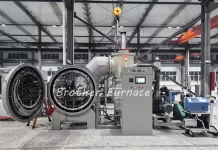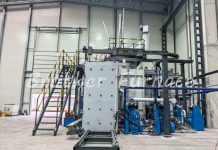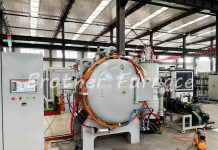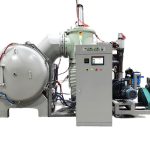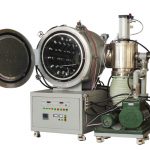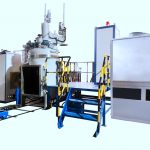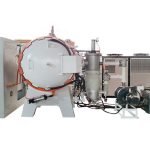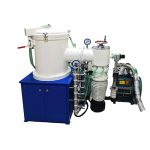

Vacuum Induction Melting (VIM) is the cornerstone of modern specialty metallurgy. By integrating electromagnetic induction heating within a high-vacuum environment, the VIM process offers unparalleled control over alloy chemistry and gas content.
This process is critical for manufacturing materials that cannot be melted in air due to high reactivity with oxygen and nitrogen, such as Nickel-based superalloys, Titanium alloys, and high-performance stainless steels.
How the Vacuum Induction Melting Process Works
The VIM process is a sophisticated cycle designed to eliminate impurities and achieve precise homogenization.
1. Charge Preparation & Loading
High-purity raw materials are cleaned and weighed. In advanced VIM operations, the charge is loaded into a ceramic crucible within the vacuum chamber to prevent any external contamination from the start.
2. Deep Vacuum Evacuation
Once sealed, the furnace utilizes a multi-stage pumping system (typically involving rotary, Roots, and oil diffusion pumps) to reach a vacuum level of 10⁻³ to 10⁻⁵ mbar. This removes oxygen, moisture, and reactive gases.
3. Induction Melting & Electromagnetic Stirring
A medium-frequency induction coil creates an alternating magnetic field, inducing eddy currents directly within the metal.
- The Advantage: Unlike traditional heating, the electromagnetic field provides a natural stirring effect, ensuring the melt is chemically and thermally uniform.
4. Refining & Degassing
Under high temperature and vacuum, volatile impurities and dissolved gases (Hydrogen, Nitrogen) are removed through Sieverts’ Law kinetics. This is the stage where “metallurgical cleanliness” is achieved.
5. Precision Alloying
Reactive elements (like Al, Ti, or Zr) are added via a vacuum-locked charging system. This prevents “alloy burn-off” and ensures the final chemistry matches the most stringent specifications.
6. Controlled Casting
The molten metal is poured into molds using a precision tilting mechanism. Depending on the application, this may involve Equiaxed (EQ), Directionally Solidified (DS), or Single Crystal (SX) casting techniques.
Technical Specifications of VIM Systems
| Feature | Standard Requirement | VIM Advantage |
|---|---|---|
| Atmosphere | Ambient Air | High Vacuum (<10-3 mbar) |
| Oxygen Content | High (Oxide Inclusions) | Ultra-Low (High Fatigue Strength) |
| Composition Control | ±1.0% | ±0.1% (Extreme Precision) |
| Homogeneity | Manual Stirring | Automatic Electromagnetic Stirring |
Key Advantages of VIM Technology
- Zero Oxidation: Eliminates the formation of slag and oxide inclusions, which are the primary causes of structural failure in aerospace components.
- Effective Degassing: Reduces Hydrogen embrittlement and Nitrogen porosity to near-zero levels.
- Trace Element Control: Allows for the removal of high-vapor-pressure impurities like Lead (Pb), Bismuth (Bi), and Cadmium (Cd).
- Process Repeatability: Digital control systems in modern VIM furnaces ensure every batch meets the same rigorous standards.
Applications
- Aerospace: Turbine blades, discs, and engine casings made of Inconel or CMSX alloys.
- Medical: Cobalt-Chrome alloys for orthopedic implants and surgical tools.
- Nuclear: Specialty steels and Zirconium alloys requiring extreme purity.
- Electronics: Sputtering targets and rare-earth magnetic materials (NdFeB).
Selecting the Right VIM Equipment for Your Facility
Achieving the metallurgical standards required for modern superalloys depends not only on process parameters, but on the precision and reliability of the equipment itself. A professional-grade VIM system must integrate high-ultimate vacuum pumping, advanced induction heating modules, and precision crucible structures into a stable, automated platform.
Brother Furnace designs and manufactures customizable VIM systems configured to your specific alloy chemistry, melt capacity, and casting requirements — from aerospace superalloys to reactive functional materials.
- Equipment Specifications: Vacuum Induction Melting Furnace – Brother Furnace
- Process Consultation: Contact Our Metallurgy Experts
Frequently Asked Questions (FAQ)
What is the difference between VIM and VAR (Vacuum Arc Remelting)?
VIM is a primary melting process used to create alloys from raw materials. VAR is a secondary remelting process that refines ingot structure and reduces macro-segregation. In Triple Melting (VIM + ESR + VAR), ESR first removes non-metallic inclusions, followed by VAR for final grain structure refinement — a standard route for critical aerospace superalloys.
Can VIM be used for reactive metals like Titanium?
Standard ceramic crucibles are incompatible with titanium due to chemical reactivity at melting temperatures. Titanium is instead processed using Induction Skull Melting (ISM), which uses a segmented water-cooled copper crucible. The metal solidifies against the cooled walls, forming a protective 'skull' layer that isolates the melt from the crucible material.